
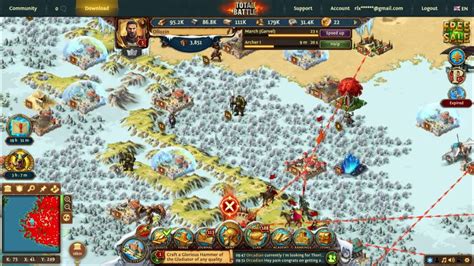
In the intricate world of Total Battle, adeptly managing your resources is crucial to ascendancy. Whether you’re a seasoned warlord or a fledgling commander. It is understanding and strategically harnessing your assets can mean the difference between a thriving empire and a forgotten ruin. This comprehensive guide is designed to traverse you through the essentials of resource management, from discerning your available resources to optimizing their output for maximum efficiency. We will delve into effective strategies for resource allocation, ways to maximize resource utilization while keeping an equilibrium in investment, and tips for enhancing your resource output. By mastering these principles, you will be well-equipped to fortify your position and outmaneuver adversaries in the quest for supremacy. Let’s pave the path to glory by turning what you have into what you need to conquer in Total Battle.
Understanding Your Available Resources
In the realm of business and project management, Understanding Your Available Resources is a pivotal step that sets the foundation for effective planning and execution. By comprehensively assessing what resources are at your disposal, whether they be financial, human, material, or technological, you are essentially taking inventory of your toolkit before embarking on any endeavor. It is only with a clear picture of your assets that you can make informed decisions and set realistic goals, ensuring that every action taken is backed by means which can support it.
Moreover, an acute awareness of your resource inventory means recognizing not just the quantity, but also the quality of what you have. It involves a deep dive into the skills of your workforce, the capacity of your machinery, and the potential of your financial holdings. For example, understanding the unique capabilities and limitations of your team allows for strategic task delegation, while acknowledging financial constraints informs budgeting decisions. Each resource, no matter how small, plays a crucial role in the success of your strategic plans.
Another aspect often overlooked in resource assessment is the temporal availability of resources. This includes knowing when certain resources will be available and for how long. For instance, some team members might only be available for a limited period or seasonal variations might affect the supply of certain materials. Without this knowledge, planning could be flawed, leading to underutilization or bottlenecks in resource allocation down the line. Recognizing the timelines of resource availability is critical in orchestrating a seamless operational symphony.
Ultimately, Understanding Your Available Resources is akin to mapping the terrain before a journey. It’s an exploratory phase that demands attention to detail and an openness to adapt strategies based on what’s available. When done correctly, this preliminary step becomes the cornerstone for Strategizing Resource Allocation, Maximizing Resource Utilization, Balancing Resource Investment, and Optimizing Resource Output which are subsequent stages crucial for reaching your desired destination—be it successful project completion, business growth, or market expansion.
Strategizing Resource Allocation
Effectively strategizing resource allocation is pivotal to the success and efficiency of any organization, be it in the public or private sector. The fundamental principle hinges upon the judicious distribution of available assets, manpower, time, and finances to various departments or projects, ensuring that each unit operates at its peak potential without wastage or redundancy. The core objective lies in harmonizing the competing demands of different initiatives, all vying for a slice of the finite resources, with a well-thought-out strategy that’s equitable and aligned with the organization’s overarching goals.
When engaging in the delicate process of resource allocation, it becomes increasingly important to maintain a clear vision of the long-term impacts of today’s decisions. Resources must be apportioned not just to meet immediate needs but also to scaffold future growth and adaptation in an ever-evolving landscape. In this context, the integration of predictive analytics and trend monitoring plays a critical role in setting the stage for dynamic allocation strategies that can adjust in real-time to shifting priorities and unexpected challenges.
Moreover, fostering a culture of transparency and accountability is a cornerstone in any resource allocation strategy. Stakeholders at every level should be made aware of the rationales behind resource distribution decisions, as this encourages a shared ownership of the outcomes. The involvement of cross-functional teams in the planning process bolsters a collaborative environment, where the unique insights and expertise of diverse personnel can illuminate potential efficiencies and synergies that might otherwise remain obscured.

Ultimately, strategizing resource allocation is not merely a task of balancing numbers on a spreadsheet—it is a nuanced and multifaceted challenge that requires a keen understanding of the organization’s heartbeat. Every allocated resource should be a stepping stone towards not just meeting, but surpassing, targeted objectives, thereby driving innovation and delivering value-based outcomes that resonate with both internal and external stakeholders, thereby cementing the company’s position in a competitive global market.
Maximizing Resource Utilization
In the quest to amplify the efficacy of every asset at one’s disposal, understanding the intricacies of Maximizing Resource Utilization stands as a pivotal endeavor. It is an undertaking that necessitates a profound scrutiny of current operational processes, with a commitment to expeditiously identifying and rectifying any underutilized resources. Deploying resources with maximal efficiency is not merely an exercise in frugality; it represents a holistic approach towards achieving unparalleled productivity and sustainability within an enterprise.
For an organization to ascend to the pinnacle of resource utilization, it must meticulously orchestrate the symphony of its resources, where every element acts in congruence with the others. This invariably entails leveraging advanced analytical tools to dissect voluminous data, discern patterns, and predict resource demands with higher precision. By harnessing technology to forecast and allocate resources wisely, businesses can precipitate a dramatic surge in their operational throughput while concurrently circumventing the ramifications of resource scarcity.
The philosophy of maximizing resource utilization is not confined to tangible assets alone; indeed, it extends to the invaluable human capital as well. The imperative to harness the immense potential of an organization’s workforce cannot be overstated, where the cultivation of a culture that promotes continuous learning and fosters employee engagement takes center stage. By assiduously developing and implementing training programs tailored to enhance skills and competencies, a business can convert latent talent into a formidable force that drives innovation and growth.
Lastly, the quest for optimizing resource utilization mandates an unyielding vigilance towards evolving industry trends and market dynamics. It is the agile enterprises that preempt change and adapt resource allocation strategies accordingly that will persist and flourish. Integrating sustainability into the fabric of resource utilization strategies not only underscores a commitment to environmental stewardship but also embodies a forward-thinking ethos that valorizes resilience and adaptability as pillars of long-term success.
Balancing Resource Investment
When delving into the complexities of Balancing Resource Investment, one must consider the multifaceted approach required to ensure the sustainability and scalability of an organization. It’s a strategic endeavor that necessitates a deep understanding of both short-term exigencies and long-term goals, aligning them meticulously to avoid overextending resources in areas that yield minimal returns or underinvesting in potential growth sectors. Assessing the pertinence of distribution channels, workforce competencies, and the ever-evolving market demands is imperative to constructing a robust and effective resource allocation framework.
The intricacies behind Resource Investment go beyond mere financial allocations, it envelopes time, human capital, and technological advancements, forming a triad that propels businesses into success or derails them into stagnation. Navigating this intricate maze calls for a holistic outlook, discerning how to allocate a finite pool of resources, not only to resolve present challenges but also to pioneer future innovations. It’s a juggling act that requires a delicate balance, constantly shifting gears between conservation and investment, risk aversion and opportunity seizing, all while maintaining a keen eye on the dynamism of industry trends.

In the grandiose chess game of Resource Investment, the strategic positioning of each piece bears significant implications on the outcome. The comprehensive analysis of internal operations juxtaposed with external market forces gives rise to informed decision-making. Executing a well-calibrated plan that substantiates the equilibrium between aggressively pursuing market shares and ensuring a sustainable operational cadence is not merely desirable but integral to the viability of the enterprise. This equilibrium is the linchpin that upholds the stability of an organization amidst the tumultuous waves of competitive markets.
Ultimately, Balancing Resource Investment is akin to conducting a symphony, where the harmonious integration of various instruments creates a melodious ensemble; so does the synchronized investment in human resources, innovation, and capital. Crafting a scalable architecture that aligns with strategic business objectives, yet flexible enough to adapt to unforeseen circumstantial flux, is the hallmark of astute leadership. Embracing this balance is what distinguishes thriving entities from those asphyxiated by their myopic resource management practices, setting the stage for a legacy of innovation, growth, and financial resilience.
Optimizing Resource Output
In the realm of business or project management, the optimization of resource output is paramount for achieving maximum efficiency and productivity. To accomplish this, one needs to delve into the intricate process of assessing each resource’s contribution to the overall output and then finessing their utilization in such a way that they yield the highest possible returns. It is not merely about pushing resources to their limits, but rather about fine-tuning their application so that every ounce of potential is harnessed, ensuring that waste is minimized and every action translates into a valuable output.
The journey to optimize resource output often starts with a comprehensive analysis of current resource usage, identifying areas where resources may be under or over-utilized. By attaining a delicate balance between resource input and output, organizations can create a more streamlined process that not only reduces redundancy but also augments the quality of the final product or service. This entails a strategic approach towards the allocation and real-time adjustment of tasks, allowing for dynamic resource management that adapts to the fluctuating demands of a project or business operation.
Moreover, the quest for optimization is not static; it requires constant monitoring and iterative improvements based on performance metrics and feedback mechanisms. Scrutinizing the data to understand trends, peaks, and troughs in resource performance enables decision-makers to fine-tune their strategies, leading to an enhanced calibration of resources that are at once cost-effective and high-yielding. In this continuous cycle, technology plays a crucial role, providing tools and systems that can analyze and predict optimal resource configurations with remarkable precision.
Ultimately, optimizing resource output is not a one-off task, but an ongoing pursuit that must be ingrained within the ethos of an organization. It is the synergy between strategic planning and agile execution that creates a conducive environment for resources to perform at their peak. Organizations that master this art are not only able to achieve superior results but also gain a competitive edge in a market where efficiency, sustainability, and productivity are not just desired, they are demanded.
Frequently Asked Questions
What types of resources can be found in Total Battle?
In Total Battle, players can typically find a variety of resources such as gold, wood, stone, iron, and food, each serving a specific purpose in building and maintaining your empire.
How should players approach resource allocation in Total Battle?
Players should allocate resources based on their current goals and strategic needs, such as expanding their territory, upgrading buildings, or raising an army, always ensuring that they have a balanced approach to avoid shortages.
What are some tactics for maximizing resource utilization in the game?
Maximizing resource utilization can be achieved by focusing on upgrading resource buildings, researching technologies that boost production, and carefully timing resource gathering to coincide with in-game events or bonuses.
Why is balancing resource investment important in Total Battle?
Balancing resource investment is crucial to prevent over-commitment to one area and to maintain a strong and versatile city. It allows players to adapt to changing situations, defend against attacks, and progress steadily in the game.
What can players do to optimize their resource output?
To optimize resource output, players can engage in alliances for shared benefits, participate in events that offer resource gains, manage and protect their workers efficiently, and eliminate wasteful expenditure by planning ahead.
Can you explain how understanding available resources can influence in-game strategy?
Understanding available resources allows players to make informed decisions about army size, defense mechanisms, and expansion rate. It also helps identify which resources are in excess or need, influencing trade and diplomacy strategies within the game.
What are the benefits of effectively strategizing resource allocation?
Effectively strategizing resource allocation leads to a more robust and resilient empire, greater efficiency in building and upgrading, and the ability to capitalize on opportunities while mitigating risks associated with resource scarcity or surplus.
Leave a Reply