
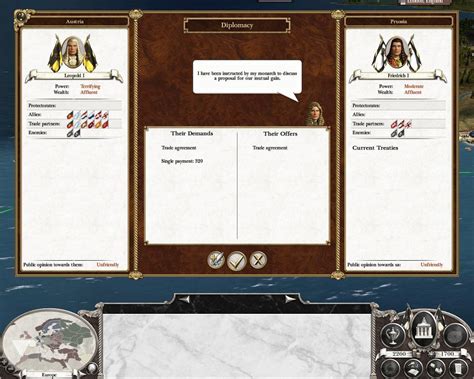
In the complex and competitive world of Total Battle, success hinges as much on the strength of your army as on the alliances you forge and the diplomacy you maneuver. Mastering the art of alliance and war is essential in this intricate game of power and stratagem. In this blog post, we delve into the unwritten laws that govern the intricate tapestry of relationships among kingdoms. We’ll explore why forming alliances is a cornerstone of your conquest, the finesse required to build robust diplomatic ties, the step-by-step guide on creating a formidable alliance, the tactics that ensure triumph in alliance wars, and how negotiation and diplomacy can be your greatest assets or your Achilles’ heel. So, suit up, strategists and diplomats alike, as we embark on a journey into the heart of ‘Total Battle: Alliance Wars and Diplomacy,’ where the right allies and the perfect negotiations pave the path to glory.
The Importance of Alliances in Total Battle
Within the vast and intricate universe of Total Battle, the formation and maintenance of alliances stand as formidable pillars that uphold the dynamic social structure and strategic gameplay at its core; a harmonious symphony of camaraderie and tactical acumen is essential for fortifying positions, where individual prowess alone often dwindles in the shadow of cooperative might. It is through the intricate latticework of alliances that players can collectively weave a sturdy fabric of defense and aggression, thereby enhancing their ability to extend their dominion across the game’s sprawling landscapes and through its multilayered challenges.
Embarking on the journey to forge robust diplomatic relationships within Total Battle can often be likened to the delicate art of statecraft, where the impactful resonance of alliances echoes far beyond the virtual frontiers; these partnerships are crucial for resources pooling, strategizing in warfare, and sharing of critical intelligence that invariably propels the collaborative force to the pinnacle of power, effortlessly eclipsing the fragmented efforts of solitary contenders. The nurturing of such alliances is not merely a superficial endeavor, but a deep-rooted investment in the collective security and prosperity of the allied members, facilitating a reciprocal lifeline amidst the tumultuous sea of competition.
The stature of an alliance in the realm of Total Battle is undeniably amplified by the diversity and skills of its constituents, crafting a mosaic of player proficiencies that, when stitched together, yields an indomitable tapestry capable of withstanding the vicissitudes of war; it is within this collective entity that individuals find solace and strength, a united front that not only shares in the spoils of victory but also shoulders the weight of defeat with resilient fortitude. In this intricate dance of dominion, the eminence of an alliance is often the cornerstone upon which empires rise and fall, narrating a saga of supremacy written by the quill of unity and emboldened by the ink of strategic foresight.
Therefore, grasping the full spectrum of the importance of alliances in Total Battle reveals a multifaceted reality where strategic partnerships are not merely a component of the game but the lifeblood that courses through its veins, fueling the ascendancy of powerhouses and shaping the geopolitical landscape of this digital realm; in this world, where allegiance and strategy interweave, alliances emerge as indispensable conduits of influence, fostering a web of interdependencies that underscores the quintessential truth—united we stand, divided we fall. The value of alliances in Total Battle is an unspoken oath, a silent agreement amongst gladiators to conquer not just territories, but to triumph over the solitude of ambition with the solidarity of brotherhood.
Building Strong Diplomatic Relationships in Total Battle
In the strategic landscape of Total Battle, the crafting and nurturing of diplomatic relationships stand as a cornerstone for sustained success and growth; for it is not through strength of arms alone that empires thrive, but through the adept weaving of alliances and pacts that can turn the tide in both war and peace. In a realm where every decision could lead to either a formidable partnership or an unrelenting rivalry, the art of diplomacy becomes an essential skill for any leader aspiring to carve their name upon the annals of history.
Central to building strong diplomatic relationships is the alignment of interests and the exchange of valuable resources or intelligence, which serves to solidify the bonds of friendship and cooperation between allies in Total Battle. These relationships extend beyond mere transactional interactions; they are built upon trust, mutual respect, and a shared vision for the future, underpinning the strength of an alliance with the resilience needed to withstand the tests of time and upheaval brought forth by the capricious winds of war.
Moreover, effective communication is the lifeblood of diplomacy, and in Total Battle, cultivating open channels of dialogue, from emissaries to summits, ensures that allies are not operating in a vacuum but are instead moving in concert with a chorus of strategic minds. This harmonious interplay of ambitions and strategies augments a collective power far greater than the sum of its parts, providing a bulwark against common enemies and a network of support when the clarion call of battle resounds across the lands.

At the heart of diplomacy in Total Battle lies the understanding that today’s adversary may be tomorrow’s comrade, thus emphasizing the critical nature of maintaining decorum and civility even in the face of conflict. For it is in the gracious handling of both triumph and defeat, in nurturing long-term relationships over short-term gains, and in extending the olive branch when the fog of war clears, that the most impenetrable alliances are forged, heralding an era of prosperity for those under the banner of unity.
How to Form an Alliance in Total Battle
In the immersive world of Total Battle, forming an alliance stands as an pivotal strategic play, bolstering not only your defensive capabilities but also amplifying your offensive prowess on both a micro and macro scale, leading to a more enriching experience while navigating through the intricate tapestry of in-game politics and warfare.
To initiate the creation of an alliance, one must navigate to the Alliance section, where you can contemplate the delicate balance between the existing power structures, or, if you find them lacking, embark upon the ambitious undertaking of establishing your own, thereby setting forth the foundational stone upon which the path to dominion is laid.
Recruitment of members is as much an art form as it is a strategic imperative; it requires a calibrated approach where one must discern and invigorate fellow players whose goals align with yours, ensuring that together, as a cohesive unit, you will create a bulwark against adversities and a formidable force in orchestrating the alliance war strategies that are essential for expansion and survival in the fiercely competitive realm of Total Battle.
Remember that communication, both internally with alliance members, and externally, with potential allies and adversaries, is the conduit by which trust is fortified and strategies are honed; effective dialogue is a cornerstone in not just how to form an alliance, but in how it is nurtured and sustained, ensuring that your collective presence within Total Battle grows not only in might but also in legend.
Strategies for Successful Alliance Wars in Total Battle
In the intricate world of Total Battle, engaging in alliance wars is not merely about deploying troops and conquering territories; quite the contrary, it requires a deep understanding of strategic gameplay and the ability to forecast the moves of your adversaries, much like in a game of chess where every piece moved could signify the difference between a triumph and a downfall, with the additional layer that comes from the multitude of alliances that you could be facing, all with their unique strategies, resources, and diplomatic ties.
One of the pivotal elements to wage a successful alliance war is the unity and coordination within your alliance, where every member is not only aware of the overall strategy but also plays a specialized role that complements the other; a harmonious synergy, where the collective effort of well-orchestrated assaults and defenses, can take down even the most fortified opponent, much like a well-rehearsed orchestra where each musician’s note is crucial to the symphony’s grandeur and the conquest of an audience’s acclaim.
To ensure that your army is prepared for the inevitable fray, it is important to not only build a strong and versatile force but also to equip them with the necessary resources; this involves not just stockpiling supplies for endurance but also ensuring that each warrior is armored with the knowledge of when to strike and when to hold back, which is akin to a master painter who knows exactly when to lay on a stroke for maximum effect or when to step back to take in the view and plan the next masterful sweep of the brush.
Ultimately, successful strategies in Total Battle‘s alliance wars boil down to intelligence gathering and the strategic dissemination of this information; it is about knowing the terrain as well as your own hand, predicting enemy movements, exploiting their weaknesses, and striking with decisive force at the opportune moment, which brings to mind the agile maneuvers of a skilled dancer who captivates the audience with their precise and almost prophetic anticipation of the rhythm’s ebbs and flows, cementing their place on the stage of victory.
Negotiation and Diplomacy in Total Battle
Mastering the art of Negotiation and Diplomacy in Total Battle is tantamount to wielding a double-edged sword that can either craft unbeatable alliances or trigger devastating conflicts, depending upon the wielder’s deftness and strategic poise; it’s a game within the game itself that requires players to continuously engage in dialogue, forge mutual understandings, and often, make concessions that benefit the collective over individual gains, thus building a foundation of trust and cooperation that could make or break the course of their virtual empires.
When delving into the intricacies of Negotiation and Diplomacy within the realm of Total Battle, a player must adopt the mantle of a shrewd diplomat, where every conversation, every alignment, and every treaty signed is a deliberate move on the grand chessboard; this act entails understanding allies and adversaries alike, anticipating their needs and fears, and tailoring propositions that resonate with their aspirations, thus maneuvering adversarial situations into opportunities for alliance strengthening and expansion.

The pivotal role that Negotiation and Diplomacy plays in Total Battle cannot be overstated, as it extends beyond the digital battlegrounds into the essence of human interaction and strategic thinking; players must recognize that although force is a substantial aspect, the power of dialogue and agreements can often pave the way for more sustainable victories, wherein collective strategy and resource sharing lead to formidable alliances capable of weathering the storm of war that inevitably sweeps across the tumultuous terrain of Total Battle.
Effective Negotiation and Diplomacy within Total Battle reflect a microcosm of real-world international relations, where diverse entities with varying degrees of power and interests seek common ground for mutual prosperity or, at times, grapple with the arduous task of conflict resolution; it is the diplomatic ties fostered through communication, compromise, and common goals that truly define the caliber of alliances, propelling them towards either the annals of glory or the ashes of downfall in the ever-evolving saga of Total Battle.
Frequently Asked Questions
What are the key benefits of forming an alliance in Total Battle?
Forming an alliance in Total Battle provides players with strategic advantages such as mutual defense, coordinated attacks, resource sharing, and social interaction. Alliances help players grow more quickly and offer protection from more powerful adversaries.
Why are diplomatic relationships important in Total Battle?
Diplomatic relationships are crucial in Total Battle as they help ensure peace, create trade opportunities, and provide support in times of war. Diplomacy can also lead to beneficial treaties and non-aggression pacts, allowing players to develop their cities and armies without immediate threat.
What are the basic steps to form an alliance in Total Battle?
To form an alliance in Total Battle, a player typically needs to meet certain prerequisites such as reaching a specific level or having enough resources to create one. Then, they can either create a new alliance and invite other players or search for an existing one to join, aligning with their goals and play style.
Can you provide some strategies for winning alliance wars in Total Battle?
Winning alliance wars in Total Battle requires careful planning and coordination. Strategies include scouting enemy alliances, synchronizing attacks with alliance members, focusing on enemy resources, and ensuring robust defenses at home. Communication within the alliance is also key to adapt to the unfolding battlefield dynamics.
How can players effectively negotiate and navigate diplomacy in Total Battle?
Effective negotiation and diplomacy in Total Battle involve clear communication, understanding the needs and goals of other players, and being willing to compromise. Players should build a reputation for fairness and reliability, use diplomacy to form beneficial alliances, and always be prepared for the possibility of betrayal.
Are there any tools or features within Total Battle that aid in alliance and diplomatic management?
Yes, Total Battle offers various tools and features to manage alliances and diplomacy, such as alliance chat for communication, the ability to appoint roles and responsibilities within an alliance, war coordination tools, and diplomacy channels to negotiate with other alliances.
What are some common challenges alliances face in Total Battle and how can they overcome them?
Common challenges include managing different player personalities, coordinating across time zones, and developing effective battle strategies. Alliances can overcome these by establishing clear rules, using external communication tools for better coordination, and continuously evolving tactics through collective experience and knowledge sharing.
Leave a Reply